
"God Commands Us To Live Right" || Pastor Debra Carruthers
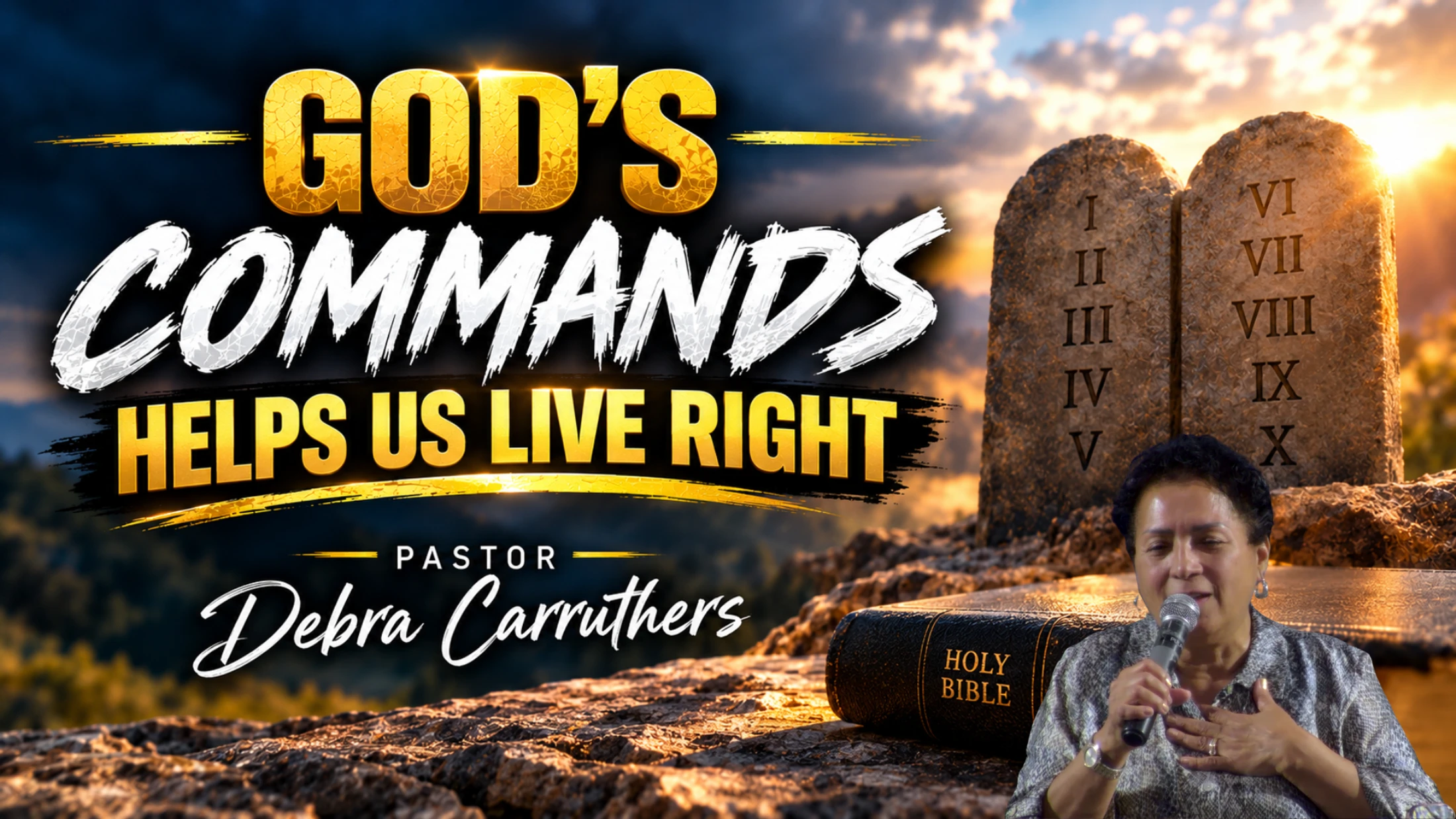
Study Guide: God Commands Us to Live Right
God’s commandments establish a pattern for righteous living rooted in worship,
obedience, reverence, integrity, and relationship with Him. The message traces
divine instruction from Genesis through Exodus, emphasizing that God’s commands
are not arbitrary restrictions; they provide order, protect people from sin,
shape families and communities, and direct believers toward a life that honors
God.
The foundation of obedience is recognizing who God is: the One who rescues,
delivers, and deserves exclusive devotion. In Exodus 20, God first identifies
Himself as the Lord who brought Israel out of Egyptian slavery before giving
the Ten Commandments. This order matters: God’s people obey in response to His
character and deliverance.
Scriptural Framework
God’s First Instructions in Genesis
- Divine commands begin early in Scripture. In Genesis 2, humanity receives
responsibility to work and care for the garden.
- God also gives a clear boundary: Adam and Eve may eat from the trees of the
garden except the tree of the knowledge of good and evil.
- The prohibition demonstrates that obedience requires trusting God’s word
rather than replacing it with personal interpretation or desire.
- The consequences of disobedience reveal that God’s instructions are connected
to life, relationship, and moral order.
The Ten Commandments in Exodus 20
Israel receives the commandments after being delivered from Egypt.
- God uses Moses as an intermediary and spokesman to communicate His covenant
instructions to the people.
- The Israelites witness God’s power at the mountain and respond with fear,
asking Moses to speak to them rather than hearing God directly.
- Moses teaches that God’s manifestation is meant to produce reverent fear—a
fear that restrains people from sin rather than merely terrifying them.
The Commandments and Their Practical Meaning
1. Worship God Alone
- God commands His people to have no other gods before Him.
- This command calls for exclusive loyalty, trust, worship, and love.
- God’s identity as Israel’s rescuer establishes His right to their
devotion.
- The command is relevant to every form of bondage, including sin. God remains
able to deliver people who genuinely desire freedom.
2. Reject Idolatry
- God forbids the making, bowing to, or worshiping of idols.
- An idol is anything given the affection, dependence, honor, or devotion that
belongs to God alone.
- God is described as jealous, meaning He will not accept divided worship or
competition from false gods.
- Obedience carries generational significance. The message emphasizes both the
consequences of rejecting God and the enduring love shown to generations who
love and obey Him.
3. Honor God’s Name
- God’s name must not be misused.
- Reverence for God includes speech: His name should not be used carelessly,
falsely, as a curse, or in profanity.
- This command challenges believers to consider whether their language reflects
honor for God.
- A holy life includes both visible behavior and disciplined words.
4. Keep the Sabbath Holy
- The Sabbath command provides six days for ordinary work and sets apart the
seventh day for rest and dedication to God.
- Rest is presented as an act of obedience and worship, not laziness.
- Sabbath rest supports physical health, mental clarity, spiritual renewal, and
better decision-making.
- Setting aside time for God demonstrates that productivity, schedules, and
pressures do not have ultimate authority over one’s life.
5. Honor Father and Mother
- Honoring parents is associated with God’s promise of long life and
well-being.
- The command remains important even when family relationships are difficult or
marked by painful experiences.
- Honor does not deny the reality of trauma or relational harm; it calls
believers to pursue a godly response instead of perpetuating dishonor.
- The way people honor their parents teaches the next generation how to honor
authority and family.
6. Do Not Murder
- The command directly forbids taking human life.
- Its application also challenges destructive speech and hostility.
- Proverbs teaches that death and life are in the power of the tongue; words
can wound, discourage, and tear down, or they can encourage and restore.
- A gentle answer can turn away wrath, while harsh speech can create
conflict.
- Righteous living requires choosing language that edifies others.
7. Do Not Commit Adultery
- Marriage is treated as a covenant made before God.
- Adultery violates trust, faithfulness, and the covenant relationship between
spouses.
- Faithfulness in marriage requires an ongoing choice: both partners choose one
another repeatedly, not only at the wedding ceremony.
- Divorce and separation are recognized as painful realities that call for
peace, reconciliation where possible, and dependence on God’s guidance.
8. Do Not Steal
- Stealing includes taking anything that belongs to someone else, regardless of
how small or seemingly insignificant it may be.
- Integrity is required even when nobody else is watching because God sees all
actions.
- Believers are responsible for recognizing the difference between right and
wrong and refusing dishonest gain.
9. Do Not Give False Testimony
- God commands truthfulness in how people speak about their neighbors.
- False testimony damages reputations, relationships, justice, and trust.
- Honesty is an essential part of righteous character, especially in situations
where words influence how others are treated.
10. Do Not Covet
- Coveting is an inward desire for what belongs to another person: possessions,
relationships, status, or circumstances.
- The warning against coveting challenges comparison and envy.
- Outward appearances can be misleading; people may appear successful while
privately facing difficulties.
- Earthly possessions have limited and temporary value. Jesus’ teaching in
Matthew 6 calls believers to store up treasures in heaven rather than making
material things their ultimate pursuit.
Worship, Sacrifice, and Humility
- God gives Moses instructions regarding altars, including the use of natural,
uncut stones.
- The altar’s construction reflects the holiness of worship and the need to
approach God according to His instructions rather than human pride or
self-display.
- Though animal sacrifices were central in the Old Testament setting, the
message applies sacrifice spiritually: believers now offer their hearts,
praise, and lives to God.
- Psalm 51 emphasizes that God does not despise a broken spirit and contrite
heart.
- True worship is marked by humility, repentance, surrender, and dependence on
God—not pride or performance.
Major Takeaways
- God’s commands flow from His identity as Redeemer and Lord.
- Obedience is both personal and generational; choices can influence children,
families, and future patterns of faith.
- Reverence for God should affect worship, work, rest, speech, relationships,
sexuality, honesty, and possessions.
- Fear of God is presented as reverent awareness of His holiness that helps
restrain sin.
- A strong relationship with God replaces destructive fear with guidance,
security, and purpose.
- Submission to God should shape daily decisions, allowing Him to direct a life
that honors Him.
Short-Answer Quiz
1. Why does God identify Himself as the One who delivered Israel from Egypt
before giving the Ten Commandments? Explain how this introduction shapes the
meaning of obedience.
2. How does the first commandment address both ancient idol worship and modern
forms of misplaced devotion? Give at least one example of something that could
function as an idol today.
3. What does it mean that God is “jealous” for His people’s worship? Explain
why this should not be understood as ordinary human envy.
4. How does keeping the Sabbath holy serve as both a spiritual practice and a
practical benefit? Include the role of rest in the answer.
5. Why can honoring parents be challenging for some people? Explain how the
command can still shape a person’s response in difficult family
circumstances.
6. How does the teaching extend the command against murder to include speech?
Use the ideas of life and death in the power of the tongue and a gentle answer
turning away wrath.
7. Why is adultery presented as more than a private failure? Explain its
connection to covenant, faithfulness, and the marriage relationship before
God.
8. What principle does the command against stealing establish about integrity?
Explain why the size or value of the item does not remove the moral
issue.
9. Why is coveting dangerous even if it does not immediately result in an outward
action? Connect your answer to comparison, dissatisfaction, and earthly
treasure.
10. What do the altar instructions and Psalm 51 teach about approaching God?
Explain the significance of humility, a broken spirit, and surrender in
worship.
Answer Key
1. God begins by identifying Himself as Israel’s rescuer to remind them that He
has already acted faithfully on their behalf. Obedience is therefore a response
to God’s grace, authority, and deliverance rather than an attempt to earn His
favor.
2. The command requires exclusive worship of God and forbids treating anything
else as ultimate. Modern idols may include money, success, approval,
relationships, status, pleasure, or personal control when these receive greater
trust and devotion than God.
3. God’s jealousy refers to His holy and rightful demand for exclusive covenant
loyalty from His people. Unlike sinful human envy, it reflects God’s commitment
to protect the relationship and reject false worship.
4. Sabbath rest is a command to set apart time for God and cease ordinary
labor. It also strengthens physical and mental health, brings clarity, and
resists the idea that constant work is more important than worship.
5. Family pain, neglect, trauma, and conflict can make honoring parents
difficult. The command calls for a godly posture of respect and refusal to
perpetuate dishonor, while not requiring people to deny harm or ignore
necessary boundaries.
6. The message applies the command beyond physical killing by recognizing that
speech can deeply wound or strengthen others. Believers should reject harsh,
destructive language and choose gentle, encouraging words that promote life and
peace.
7. Adultery breaks a covenant made before God, not merely a private agreement
between two people. It damages trust, violates faithfulness, and harms the
unity and security that marriage is intended to embody.
8. The command against stealing requires honesty and respect for what belongs
to others. Taking even a small item is still wrong because integrity is
measured by faithfulness to God, not by the perceived value of what was
taken.
9. Coveting feeds envy, comparison, and dissatisfaction with God’s provision.
It can eventually lead to resentment, dishonesty, or other sinful actions,
while also distracting believers from eternal rather than material
treasures.
10. The altar instructions stress approaching God with reverence rather than
human pride or self-made display. Psalm 51 teaches that God values humble
repentance, a broken spirit, and a contrite heart as genuine offerings of
worship.
Essay Questions
1. Analyze how God’s role as Deliverer shapes the purpose and authority of the
Ten Commandments in Exodus 20.
2. Compare the first four commandments with the final six commandments. How do
they connect love for God with love and responsibility toward other
people?
3. Discuss the relationship between obedience and generational influence. How
can choices of worship, speech, honor, and integrity affect a family’s
future?
4. Evaluate the claim that the commandments are not merely restrictions but
protections for human flourishing. Use several commandments to support your
response.
5. Explain how the themes of Sabbath, sacrifice, reverence, and submission
contribute to a biblical understanding of worship.
Glossary of Key Terms
- Adultery: Sexual unfaithfulness that violates the covenant of marriage.
- Altar: A place designated for worship and sacrifice to God; in Exodus, God
gives specific instructions for its construction and use.
- Blessing: God’s favor, care, provision, and promised good associated with
faithful relationship and obedience.
- Bondage: A condition of slavery, captivity, or controlling sin from which God
delivers people.
- Commandment: A directive from God that reveals His will for faithful and
righteous living.
- Contrite Heart: A humble, repentant heart that recognizes sin and turns
sincerely toward God.
- Covenant: A binding, sacred relationship or agreement established before God;
marriage is treated as a covenant.
- Coveting: Wrongful desire for another person’s possessions, relationships,
status, or circumstances.
- Deliverance: Rescue by God from slavery, danger, oppression, or sin.
- False Testimony: A lie or dishonest accusation spoken against another person,
especially one that harms justice or reputation.
- Fear of God: Reverent awe and recognition of God’s holiness, authority, and
power that leads a person away from sin.
- Holiness: Being set apart for God and reflecting His pure character in
worship and conduct.
- Honor: Showing respect, value, and appropriate regard toward God, parents,
and others.
- Idol: Anything worshiped, trusted, loved, or relied upon in the place of
God.
- Integrity: Consistent honesty and moral uprightness, including doing what is
right when no one else sees.
- Jealous God: A description of God’s rightful insistence on exclusive worship
and covenant faithfulness from His people.
- Moses: The leader chosen by God to deliver Israel from Egypt and communicate
God’s law to the people.
- Murder: The unlawful taking of human life; the teaching also warns against
destructive attitudes and speech that harm others.
- Obedience: Faithful submission to God’s commands, motivated by reverence,
love, and trust.
- Repentance: Turning away from sin and turning back to God with sincere sorrow
and changed direction.
- Sabbath: A holy day of rest dedicated to God, modeled after God’s rest
following creation.
- Sacrifice: An offering made to God in worship; spiritually, believers offer
surrendered lives, praise, and humble hearts.
- Submission: Yielding one’s will, decisions, and direction to God’s authority
and guidance.
- Ten Commandments: The foundational moral commands given by God to Israel in
Exodus 20, addressing worship, reverence, family, life, sexuality, property,
truth, and desire.
- Worship: Giving God the honor, devotion, praise, and obedience that belong to
Him alone.